158753
Książka
W koszyku
(Monografia / [Politechnika Śląska] ; 694)
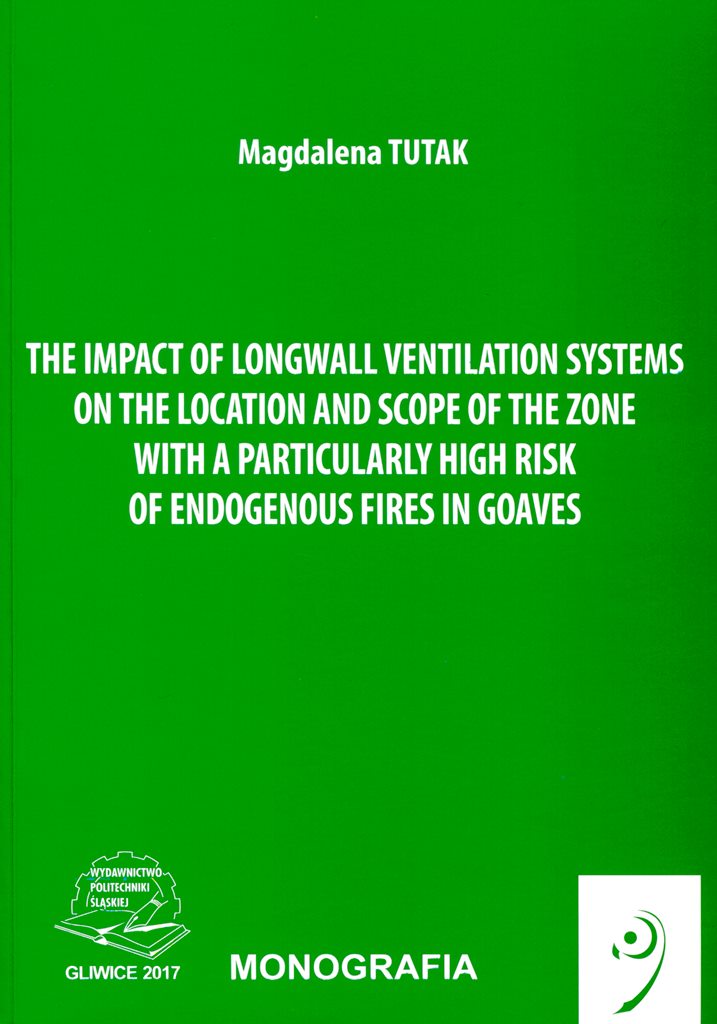
Characteristics of longwall ventilation systems The U-type ventilation system from the exploitation field borders without ancillary ventilation equipment The U-type ventilation system from the exploitation field borders with ancillary ventilation equipment The Y-type ventilation system with additional supply of fresh air along the tailgate The Y-type ventilation system with additional supply of fresh air along the tailgate from the goaves side The Y-type ventilation system with bad air distribution in two directions Other ventilation systems The longwall ventilation systems used in the years 2003-2016 Basic information on endogenous fires Factors conducive to the self heating of coal Testing for coal susceptibility to spontaneous combustion Analysis of fires in underground mine headings in the years 2003-2016 Basic information on goaves with caving Porosity and permeability of goaves with caving Analytical equations describing the flow of air stream through a porous medium Model-based testing of the flow of air stream and mining gases through goaves with caving The criterion on endogenous fire hazard The goaves permeability Model-based tests for determining the zone with a particularly high risk of endogenous fires in the goaves of longwalls Research methodology Characteristics of the numerical method Mathematical model of air stream flow and gas transport through a longwall and goaves with caving Model research for determining the zone with a particularly high risk of endogenous fires in the goaves of longwalls ventilated with the U-type system from the exploitation field borders and with the Y-type system Longwall models Model-based tests concerning the impact of a longwall ventilation system and the type of roof rocks on the location and range of the zone with a particularly high risk of endogenous fires Model-based tests for determining the zone with a particularly high risk of endogenous fires in the goaves of longwalls ventilated with the the Z-type system, and with H-type system, and with U-type system to the exploitation field borders The impact volumetric flow of ventilated air strem on location and range of particularly hazard zone of endogenous fires in goaves with caving of longwall
Charakterystyka systemów przewietrzania ścian System przewietrzania na „U" od granic pola bez pomocniczych urządzeń wentylacyjnych System przewietrzania na „U" od granic pola z pomocniczymi urządzeniami wentylacyjnymi System przewietrzania na „Y" z doświeżaniem chodnikiem nadścianowym System przewietrzania na „Y" z doświeżaniem chodnikiem nadścianowym od strony zrobów System przewietrzania na „Y" z rozprowadzaniem powietrza zużytego w dwóch kierunkach Inne systemy przewietrzania Analiza stosowanych systemów przewietrzania ścian w latach 2003-2016 Podstawowe informacje o pożarach endogenicznych Czynniki sprzyjające samozagrzewaniu się węgla Badanie skłonności węgla do samozapalenia się Analiza pożarów w podziemnych wyrobiskach górniczych w latach 2003-2016 Podstawowe informacjc o zrobach zawałowych Porowatość i przepuszczalność zrobów zawałowych Równania analityczne opisujące przepływ strumienia powietrza przez ośrodek porowaty Badania modelowe przepływu strumienia powietrza i gazów kopalnianych przez zroby zawałowe Kryterium zagrożenia pożarami endogenicznymi Wyznaczanie współczynnika przepuszczalności zrobów zawałowych Badania modelowe wyznaczania strefy szczególnego Zagrożenia pożarami enodgenicznymiw zrobach ścian Metodyka badań Charakterystyka metody numerycznej Model matematyczny przepływu strumienia powietrza i transportu gazów przez ścianę eksploatacyjną i zroby Badania modelowe wyznaczania strefy szczególnego zagrożenia pożarami endogenicznymi w zrobach ścian przewietrzanych systemami na „U" od granic i na „Y" Modele ścian Badania modelowe wpływu systemu przewietrzania ściany i rodzaju skał stropowych na położenie i zasięg strefy szczególnego zagrożenia pożarami endogenicznymi Badania modelowe wyznaczania strefy szczególnego zagrożenia pożarami endogenicznymi w zrobach ścian przewietrzanych systemami na „Z", „H" oraz na „U" do granic Wpływ objętościowego natężenia przepływu powietrza na położenie strefy szczególnego zagrożenia pożarami endogenicznymi w zrobach zawałowych
Pliki multimedialne:
Status dostępności:
Magazyn
Egzemplarze są dostępne wyłącznie na miejscu w bibliotece: sygn. 145649 E N (1 egz.)
Strefa uwag:
Uwaga dotycząca bibliografii
Bibliografia, netografia na stronach [137]-150.
Uwaga dotycząca języka
Streszczenie w języku polskim. Spis treści także w języku polskim.
Pozycja została dodana do koszyka. Jeśli nie wiesz, do czego służy koszyk, kliknij tutaj, aby poznać szczegóły.
Nie pokazuj tego więcej

Deklaracja dostępności