158825
Book
In basket
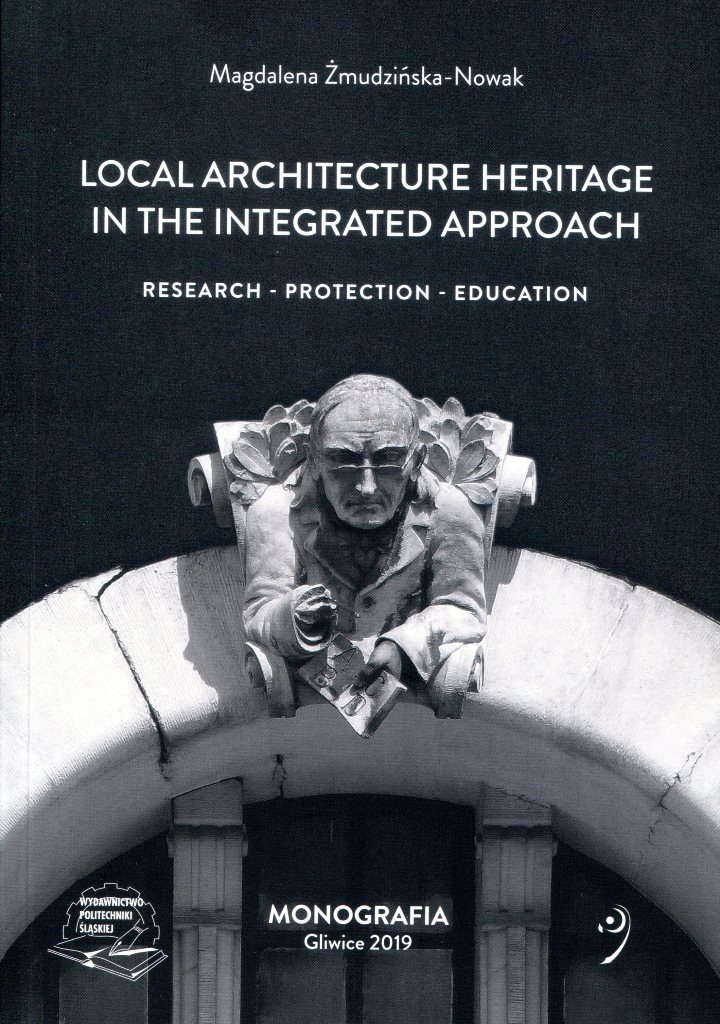
THEORY 1.The term of cultural heritage as a subject of scientific considerations 1.1.Heritage as a cultural palimpsest and its reading 1.2.Heritage as a transfer process 1.3.Cultural heritage - elitę or common value? 1.4.Social co-creation of heritage value 1.5.Heritage - approach integration PRACTICE 2.Reading the palimpsest - local cultural heritage in scientific research and their practical dimension 2.1.The Gliwice palimpsest - architectural heritage of the city viewed through the activity of architects 2.2.Architecture of Upper Silesia in the second part of 20th century — the Upper Silesian palimpsest from an interdisciplinary perspective 2.2.1.The interdisciplinary research team and work methodology 2.2.2.Reflector "Architecture and urban planning" - individual work and finał conclusions 2.3.Heritage of historical workers' housing estates in Upper Silesia in the example of the Zandka residential area in Zabrze - the palimpsest of place in interdisciplinary studies 2.3.1.Methodological approach and creation of the research team 2.3.2.Assumptions and research ąuestions 2.3.3.Studies in the interdisciplinary team 2.3.4.Finał conclusions and practical recommendations 3.Working together - architectural heritage as the subject of research and project workshop 3.1.Why workshops? - a methodological reflection 3.1.1.Workshop as a research and creative process - methodology, techniąues, tools and work organisation 3.2.Heritage as the subject and the topie of student workshops - selected examples of activities 3.2.1."Checkpoint Korbielów" 3.2.2."Project Tywrów" - studies, project concept and revitalisation activities around the former Dominican church and abbey complex in Tywrów as a valuable architectural heritage of former Kresy Wschodnie (Eastern Borderland) 3.2.3."Biskupice" - cooperation with the local community 3.2.4.Architecture on the road: A different look at the architectural city heritage - perception and education 4.Local heritage in the perspective of international collaboration 4.1.Lazio - Silesia Brownfields: Comparative Analysis and Creative Ideas 4.2.1.GIS urban analysis for brownfield revitalization - comparison between Silesia and Southern Lazio 4.2.2.The revitalization of ul. Londzina - enhancing workers' estate as post-industrial historical heritage in Zabrze, Poland 4.3.San Piętro Infine - The Place and Memory - II Luogo e la Memoria - miejsce i pamięć 4.4.Lazio - Tuscany - Silesia: Heritage Sites in Conservation Perspective (2018-2019) 4.5."Heritage of Silesia" - Searching for a Common Language in Architecture' - International Summer School of Architecture (2019) TEORIA 1.Pojęcie dziedzictwa kulturowego jako przedmiot rozważań 1.1.Dziedzictwo jako palimpsest kulturowy i jego odczytywanie 1.2.Dziedzictwo jako proces przekazywania 1.3.Dziedzictwo kulturowe - wartość elitarna czy powszechna? 1.4.Społeczne współtworzenie wartości dziedzictwa 1.5.Dziedzictwo - integracja podejścia PRAKTYKA 2.Odczytywanie palimpsestu - lokalne dziedzictwo kulturowe w badamach naukowych i ich praktyczny wymiar 2.1.Palimpsest gliwicki - dziedzictwo architektoniczne miasta przez pryzmat działalności architektów 2.2.Architektura Górnego Śląska drugiej połowy XX wieku - górnośląski palimpsest w perspektywie interdyscyplinarnej 2.2.1.Interdyscyplinarny zespół badawczy i metoda pracy 2.2.2.Reflektor „Architektura i Urbanistyka" - praca indywidualna i wnioski końcowe 2.3.Dziedzictwo historycznych osiedli robotniczych Górnego Śląska na przykładzie osiedla Zandka w Zabrzu - palimpsest miejsca w badaniach interdyscyplinarnych 2.3.1.Podejście metodologiczne i tworzenie zespołu badawczego 2.3.2.Założenia i pytania badawcze 2.3.3.Realizacja badań w zespole interdyscyplinarnym 2.3.4.Wnioski końcowe i rekomendacje aplikacyjne 3.Pracując wspólnie - dziedzictwo architektoniczne jako przedmiot warsztatów badawczo-projektowych 3.1.Dlaczego warsztaty? - refleksja metodologiczna 3.1.1Warsztat jako proces badawczy i twórczy - metodyka, techniki, narzędzia i organizacja pracy 3.2.Dziedzictwo jako przedmiot i temat warsztatów studenckich - wybrane przykłady działań 3.2.1."Checkpoint Korbielów" 3.2.2."Project Tywrów" — badania, koncepcja projektowa i działania rewitalizacyjne wokół podominikańskiego zespołu kościelno-klasztornego w Tywrowie jako cennego dziedzictwa architektury dawnych Kresów Wschodnich 3.2.3."Biskupice" - współpraca z lokalną społecznością 3.2.4.Architektura w drodze: Inne spojrzenie na dziedzictwo architektoniczne miasta - percepcja i edukacja 4.Dziedzictwo lokalne w perspektywie współpracy międzynarodowej 4.1.Lazio - Silesia Brownfields: Comparative Analysis and Creative Ideas 4.2.1.GIS urban analysis for brownfield revitalization - comparison between Silesia and Southern Lazio 4.2.2.The revitalization of ul. Londzina - enhancing workers' estate as post-industrial historical heritage in Zabrze, Poland 4.3.San Piętro Infine — The Place and Memory - II Luogo e la Memoria - Miejsce i Pamięć 4.4.Lazio - Tuscany — Silesia: Heritage Sites in Conservation Perspective (2018-2019) 4.5."Heritage of Silesia" - Searching for a Common Language in Architecture' - International Summer School of Architecture (2019)
Media files:
Availability:
Magazyn
Copies are only available in the library: sygn. 149288 E N (1 egz.)
Notes:
Bibliography, etc. note
Bibliografia, netografia na stronach 170-176.
Funding information note
Współfinansowanie: Rektor Politechniki Śląskiej
Language note
Spis treści oraz spis ilustracji także w języku polskim. Streszczenia w jezyku angielskim i polskim.
The item has been added to the basket. If you don't know what the basket is for, click here for details.
Do not show it again

Accessibility declaration